
Your HVAC system is one of the hardest-working systems in your home, quietly keeping your living space comfortable through changing seasons. Because it operates behind the scenes, it’s easy to overlook small performance changes until they become major inconveniences. A slight reduction in airflow, an unusual sound, or inconsistent indoor temperatures may not seem urgent at first, but these seemingly minor issues often signal that your system needs attention. Recognizing these warning signs early can help you avoid larger repairs, improve energy efficiency, and keep your home comfortable year-round.
If you’re searching for HVAC repair Perry, GA, understanding the early symptoms of HVAC trouble is the first step toward protecting your investment. While not every issue requires an emergency repair, knowing when your system is trying to tell you something can prevent small concerns from becoming expensive breakdowns.
Uneven Temperatures Throughout Your Home
One of the earliest indicators of HVAC trouble is uneven heating or cooling. If one room feels comfortable while another is consistently warmer or colder, your system may not be distributing air properly. Although it’s common for upper floors to feel slightly warmer during summer, significant temperature differences throughout your home often point to an underlying issue that deserves attention.
Several factors can contribute to uneven temperatures. Dirty air filters, leaking ductwork, blocked supply vents, or an aging blower motor may all reduce the amount of conditioned air reaching certain areas of your home. In some cases, the HVAC system itself may no longer be operating as efficiently as it once did. Rather than ignoring these changes, homeowners should view inconsistent comfort as an opportunity to identify problems before they worsen.
Pay Attention to Changes in Airflow
Strong, consistent airflow is essential for maintaining a comfortable indoor environment. If the air coming from your vents suddenly feels weaker than normal, your HVAC system may be struggling to circulate air efficiently. Reduced airflow forces the equipment to run longer, increasing energy use while placing additional stress on important components.
Poor airflow doesn’t always mean a major repair is necessary. Sometimes the issue is as simple as a clogged air filter or furniture blocking a return vent. However, it may also indicate leaking ductwork, dirty evaporator coils, blower motor issues, or restrictions within the duct system. Addressing airflow problems promptly helps maintain system efficiency and prevents unnecessary wear on your equipment.
Unusual Sounds Often Signal Mechanical Problems
Every HVAC system produces normal operating sounds, and most homeowners become familiar with them over time. When new noises begin to appear, they shouldn’t be ignored. Strange sounds often develop before a complete system failure, making them valuable warning signs.
Grinding, banging, rattling, buzzing, squealing, or repeated clicking can all indicate that certain components require inspection. Loose hardware, worn belts, motor issues, or electrical problems may produce unusual sounds that become more severe if left unresolved. While it’s impossible to identify the exact cause based on sound alone, scheduling a professional inspection early can prevent additional damage to other parts of the system.
Watch for Unexpected Increases in Energy Bills
An increase in your monthly utility bill isn’t always caused by higher energy prices or changing weather conditions. Sometimes it reflects a heating and cooling system that’s working harder than necessary to maintain comfortable indoor temperatures.
As HVAC equipment ages or develops mechanical issues, efficiency often begins to decline. Dirty filters, airflow restrictions, refrigerant problems, or worn components can all increase energy consumption. If your usage habits haven’t changed but your energy costs continue to rise, your HVAC system may be operating less efficiently than it should. Monitoring your utility bills throughout the year can provide valuable insight into your system’s overall performance.
Don’t Ignore Frequent Cycling
HVAC systems naturally cycle on and off as they maintain the temperature set on your thermostat. However, if your system starts running for very short periods before shutting off repeatedly, this pattern—known as short cycling—may indicate an underlying problem.
Frequent cycling can result from several issues, including thermostat malfunctions, airflow restrictions, oversized equipment, or mechanical concerns. Besides increasing energy consumption, short cycling places additional stress on system components because they repeatedly start and stop. Identifying the cause early helps improve efficiency while reducing unnecessary wear on your HVAC equipment.
Read More: Efficiency Meets Elegance: Why Modern uPVC Windows Edinburgh are More Stylish Than Ever
Common Warning Signs Every Homeowner Should Watch For
Some HVAC issues develop gradually, making them easy to overlook during everyday life. Paying attention to small changes can help you recognize problems before they become more serious.
Watch for these common warning signs:
- Weak airflow coming from supply vents.
- Rooms that never seem to reach the desired temperature.
- Unusual noises such as grinding, rattling, or buzzing.
- Frequent on-and-off cycling.
- Unexpected increases in monthly energy bills.
- Musty or unusual odors when the system starts.
- Excessive dust accumulating around air vents.
- A thermostat that doesn’t seem to match the actual room temperature.
Recognizing these signs early gives homeowners the opportunity to schedule service before minor issues affect other HVAC components.
Routine Maintenance Makes a Big Difference
One of the most effective ways to avoid expensive HVAC repairs is through regular preventive maintenance. While every system experiences normal wear over time, routine inspections help identify developing problems before they lead to unexpected breakdowns.
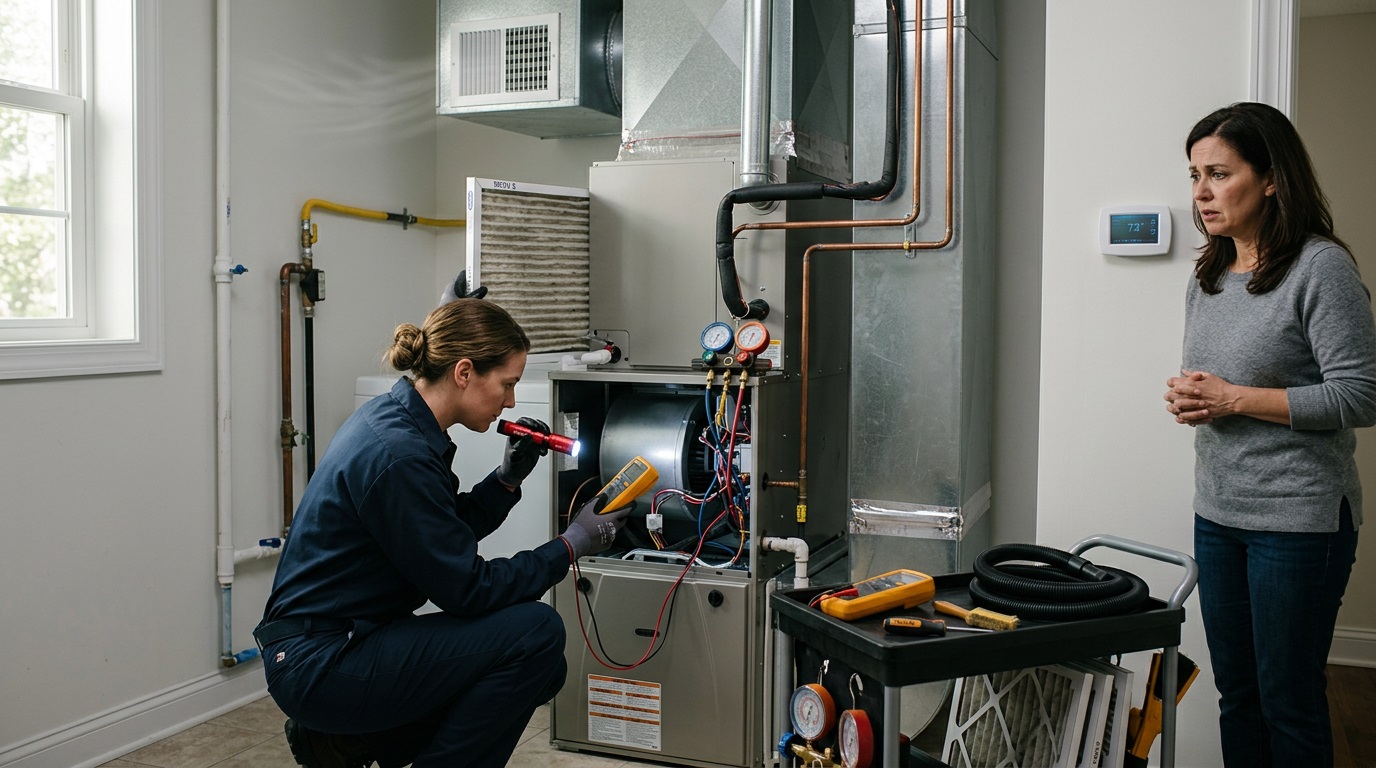
Simple maintenance tasks such as replacing air filters, keeping outdoor equipment free of debris, ensuring vents remain unobstructed, and scheduling seasonal HVAC inspections all contribute to better performance. Professional maintenance also allows technicians to inspect electrical connections, evaluate airflow, clean important components, and identify small issues that homeowners may not notice on their own. These proactive steps help improve efficiency while supporting the long-term reliability of the system.
Know When Professional Service Is the Best Option
Although homeowners can handle basic maintenance like changing air filters or checking thermostat settings, some HVAC problems require specialized knowledge and equipment. Continuing to operate a system that produces unusual noises, struggles to maintain temperature, or experiences ongoing airflow issues may place additional strain on major components.
Seeking professional assistance as soon as warning signs appear allows technicians to diagnose the underlying issue before it develops into a more extensive repair. Prompt attention not only protects your HVAC investment but also helps ensure your home remains comfortable during periods of extreme weather when reliable heating and cooling matter most.
Conclusion
Your HVAC system rarely stops working without giving some type of warning first. Uneven temperatures, weak airflow, unusual noises, rising energy bills, and frequent cycling are all signs that something may not be functioning as it should. Paying attention to these changes allows homeowners to address minor issues before they become costly repairs or inconvenient breakdowns.
Regular maintenance, careful observation, and timely professional service all play an important role in keeping your HVAC system operating efficiently throughout the year. By recognizing potential problems early and responding before they escalate, you can extend the life of your equipment, improve indoor comfort, and reduce the likelihood of unexpected repair costs in the future.
If you want to know about IKEA Wardrobes with Mirrors: Combining Storage, Style, and Sophistication then visit our Home Improvement category.