
Editorial note: This My URL Pro guide was checked against Texas statutes and current state-agency sources on August 15, 2026. It provides general legal information, not legal advice.
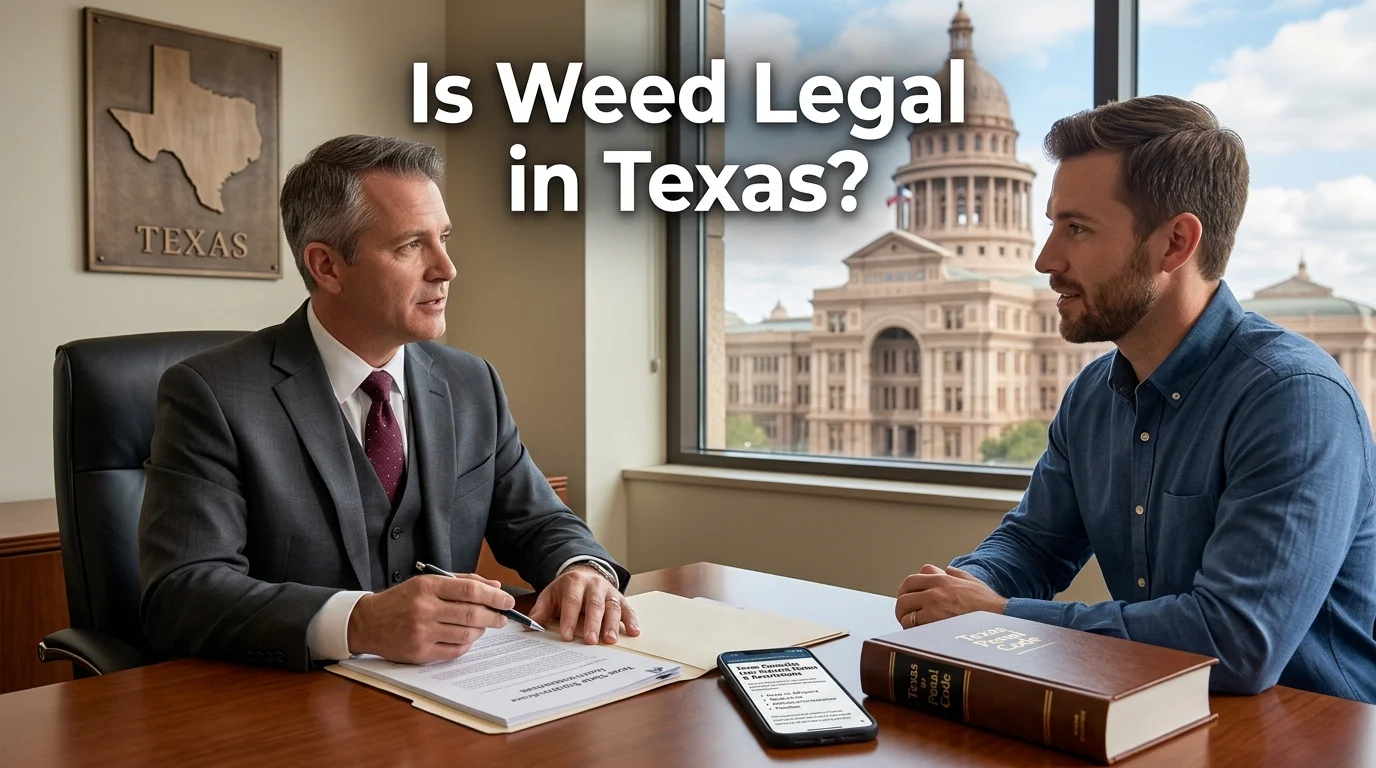
Short answer: No, not for recreational use as of August 2026. If you’re asking “is weed legal in Texas,” state law still makes marijuana possession illegal outside narrow medical exceptions. Texas allows prescribed low-THC cannabis through its medical program, while certain hemp-derived delta-9 products remain lawful if they meet current state requirements.
| Question | Texas rule in August 2026 |
| Recreational marijuana | Illegal |
| Medical cannabis | Legal for qualifying Texas patients |
| Possession of 2 oz or less of marijuana | Class B misdemeanor |
| Hemp-derived delta-9 THC | May be legal within current hemp limits |
| Delta-8 THC | Controlled substance except for naturally occurring trace amounts |
| Minimum age for consumable hemp sales | 21 |
| Home growing for patients | Not allowed |
Texas’s recreational-use rules, possession statute, medical program, and hemp regulations support these distinctions.
Is Weed Legal in Texas for Recreational Use?
No. Texas has not legalized recreational marijuana for adults, including those who are 21 or older. Recreational marijuana remains illegal under Texas law.
Texas Health and Safety Code §481.121 makes it an offense to knowingly or intentionally possess a usable quantity of marijuana unless another provision of law authorizes it. There is no general adult-use exception comparable to those in states that have legalized recreational marijuana.
That distinction matters because cannabis products sold legally elsewhere do not automatically become lawful after they enter Texas. For more explainers on changing state rules and legal topics, readers can also browse My URL Pro’s Law section.
Medical Marijuana Is Legal, but the Program Has Limits
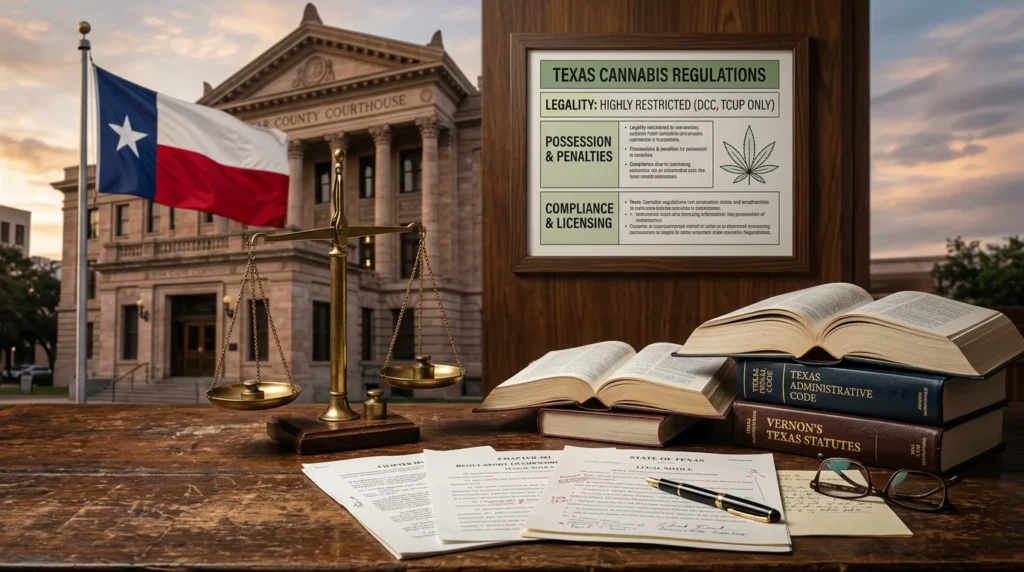
Texas does have a legal medical-cannabis system. The Texas Compassionate Use Program, administered by the Department of Public Safety, allows registered physicians to prescribe low-THC cannabis to eligible permanent Texas residents.
House Bill 46 significantly expanded that system on September 1, 2025. The law now defines low-THC cannabis for the program as cannabis containing no more than 10 milligrams of tetrahydrocannabinol per dosage unit.
Eligible conditions include epilepsy, seizure disorders, multiple sclerosis, autism, cancer, PTSD, chronic pain conditions, traumatic brain injury, Crohn’s disease or other inflammatory bowel diseases, and certain terminal illnesses. Other conditions authorized through an approved research program may also qualify.
The program still does not authorize smoking marijuana. HB 46 does, however, permit a physician to prescribe an approved aerosolized or vaporized pulmonary-inhalation method when medically necessary.
Readers researching cannabis from a health perspective can find broader health information in My URL Pro’s Health section.
What Are the Marijuana Possession Penalties in Texas?
Texas bases simple marijuana-possession charges largely on the amount involved. Under Health and Safety Code §481.121, offense levels rise sharply as the weight increases.
| Amount possessed | Offense level |
| 2 ounces or less | Class B misdemeanor |
| More than 2 oz, up to 4 oz | Class A misdemeanor |
| More than 4 oz, up to 5 lb | State jail felony |
| More than 5 lb, up to 50 lb | Third-degree felony |
| More than 50 lb, up to 2,000 lb | Second-degree felony |
| More than 2,000 lb | Special felony punishment under §481.121 |
An offense classification is not the same as a guaranteed sentence. Prior convictions, other charges, location, and case-specific facts can affect the outcome.
If you have been arrested or cited, or if you are carrying a product whose legal status is unclear, a Texas criminal-defense lawyer can evaluate the substance, quantity, testing evidence, and circumstances of your case.
Hemp-Derived THC Rules Changed Again in 2026
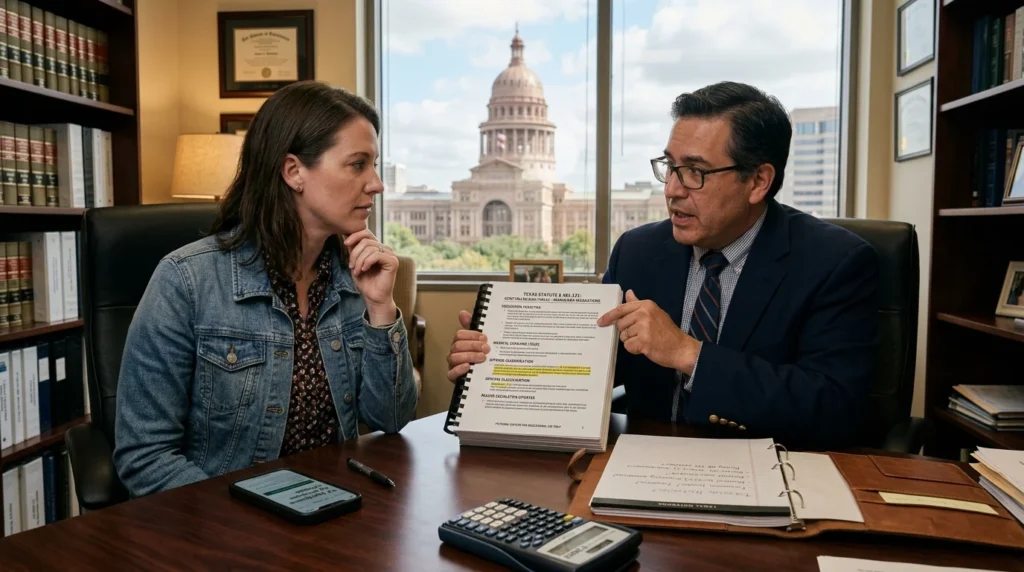
This is where older Texas cannabis articles can become misleading. The Texas Department of State Health Services says a state scheduling action affecting delta-8 THC took effect on July 31, 2026. Following a Texas Supreme Court decision, DSHS treats delta-8 as a controlled substance, apart from naturally occurring trace amounts in hemp.
DSHS warns that consumable hemp products labeled as containing delta-8, or products shown to contain more than permissible trace amounts, may be detained and referred to law enforcement.
That does not mean every THC-containing hemp product has disappeared. DSHS says consumable hemp products may still contain no more than 0.3% delta-9 THC on a dry-weight basis. Retail sales of consumable hemp products are restricted to customers aged 21 or older, and government-issued identification is required.
THCA products also deserve extra caution. Texas’s 2026 hemp guidance addresses THCA alongside delta-9 THC when determining acceptable hemp THC levels, so a package marketed as “hemp” or “THCA flower” should not be assumed to be legal based on the label alone.
Federal hemp rules are scheduled to change again on November 12, 2026. That makes product-specific verification especially important later this year.
Can You Grow Marijuana at Home in Texas?
No general right to grow marijuana at home exists in Texas. The Texas Department of Public Safety specifically says that patients in the Compassionate Use Program cannot grow their own cannabis. Only licensed organizations may cultivate cannabis for authorized low-THC medical products.
Recreational home cultivation is not legal either. Industrial hemp operates under a separate regulated licensing system and should not be confused with growing marijuana for personal use.
What If You Bought Marijuana Legally in Another State?
Buying a product legally in another state does not create an exemption from Texas possession law. Texas still treats recreational marijuana possession as unlawful. In practice, that means a product purchased in a state where adult-use cannabis is legal can still expose you to penalties once you possess it in Texas.
Check Texas law based on the product you possess, not the law of the state where you bought it.
Check the Product and the Current Rule Before You Rely on a Label
Texas cannabis law now has three separate tracks: prohibited recreational marijuana, a regulated medical program, and a hemp market with rapidly changing THC restrictions.
If a product could expose you to criminal charges, check current state guidance instead of relying on packaging or a retailer’s description. For broader support related to substance use and treatment, My URL Pro also has a guide to the role of addiction medicine specialists and compassionate care.
Anyone facing an arrest, pending charge, or product-specific legal question should speak with a qualified Texas attorney.
Frequently Asked Questions
No. Being 21 does not make recreational marijuana legal in Texas. The 21-and-older requirement applies to sales of qualifying consumable hemp products, not ordinary recreational marijuana.
Yes, for eligible permanent Texas residents who receive a prescription through the Texas Compassionate Use Program. HB 46 expanded qualifying conditions and changed the permitted dosage framework beginning September 1, 2025.
Texas DSHS says delta-8 THC is a controlled substance, except for naturally occurring trace amounts in hemp. The relevant scheduling action took effect on July 31, 2026.
Some hemp-derived delta-9 products may remain lawful when they comply with Texas’s consumable-hemp rules, including the current 0.3% delta-9 THC dry-weight limit. Buyers must also be at least 21.
No. DPS says patients must obtain authorized low-THC cannabis through licensed dispensing organizations rather than growing plants at home.