

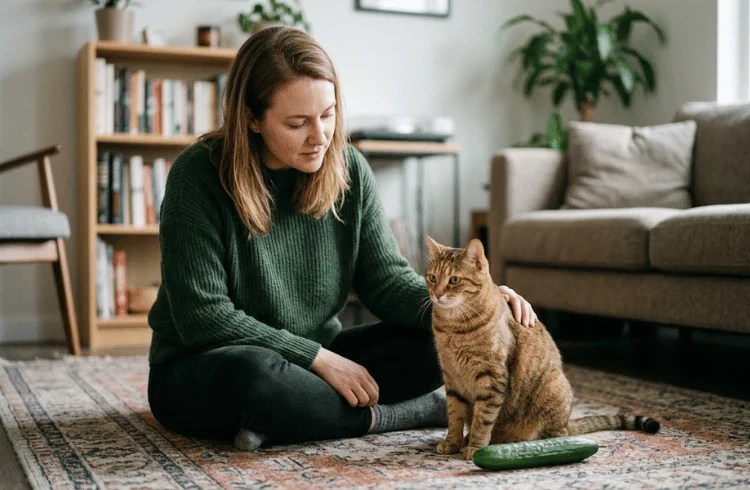
Why are cats afraid of cucumbers? The viral clips make the vegetable look like a feline nightmare, but the cucumber is rarely the real issue. The bigger trigger is surprise when an unfamiliar object suddenly appears in a familiar place. That reaction is a protective startle response, not proof of a built-in cucumber phobia.
Quick answer: Most felines are not frightened by cucumbers themselves. The dramatic jump usually follows a sudden, unfamiliar object appearing close behind them. This often happens while they are eating and relaxed. A cucumber’s snake-like shape might add to the alarm, but experts place more weight on surprise and novelty.
| Key point | What it means |
|---|---|
| Main trigger | An unexpected object suddenly appears nearby |
| Cucumber-specific fear | Not established |
| Snake theory | Possible, but disputed by behavior experts |
| Feeding matters | The animal may be relaxed and focused on food |
| Main risk | Fear, stress, distrust, or accidental injury |
| Safer choice | Let unfamiliar objects appear gradually |
TL;DR
The famous cucumber reaction is mainly a startle response. A cat turns around and sees something large that wasn’t there moments earlier. Personality, surroundings, and vulnerability while eating can affect the response. The snake theory remains possible, but veterinary behavior experts do not consider it the only explanation.
Why Are Cats Afraid of Cucumbers in Viral Videos?
Look closely at most cucumber prank videos, and you will notice a repeated setup. The pet is usually eating, drinking, or concentrating on something else. Someone quietly places the vegetable behind it before the animal turns around.
That setup matters more than the vegetable itself. The animal suddenly finds a large object inside a space it believed was predictable. Its first response may be to create distance, then stop to investigate.
Cornell Feline Health Center behaviorist Pamela Perry points to the sudden appearance of a novel object. She also notes that an animal’s personality affects how strongly it responds. More fearful individuals may react more dramatically than confident ones.
This reaction fits many other everyday feline behaviors. Readers interested in those quirks can explore MyURLPro’s interesting cat facts for more examples. Individual behavior can be far more revealing than a viral trend.
The Startle Reflex Explains the Sudden Jump
A startle response is designed for speed. When something unexpected appears nearby, immediate movement can be safer than waiting to identify it. That helps explain the dramatic leaps seen in online clips.
The cucumber also tends to appear at extremely close range. There is little space for cautious investigation when an unfamiliar object suddenly occupies the area behind the animal. Retreat becomes a quick way to gain distance and assess the situation.
Veterinarian-reviewed guidance from Chewy describes unfamiliar objects and sudden environmental changes as common triggers. The reaction can include jumping, scrambling, hissing, or fleeing. Those behaviors signal fear or confusion, not amusement.
Does a Cucumber Look Like a Snake?

The snake theory became popular because the shapes share obvious features. Both can be long, curved, and low to the ground. A surprised animal might initially treat that silhouette as a possible threat.
Still, that explanation should not be presented as settled science. Cornell’s behavior expert says domestic felines do not have a universal natural fear of snakes. Some individuals even hunt snakes when they encounter them.
A snake-like outline could trigger an initial alarm in some situations. Yet the surprise factor explains why many other unfamiliar objects can produce similar reactions. The safest conclusion is that shape may matter, but context matters more.
Why the Food Bowl Makes the Prank More Startling
Feeding is a focused activity, and pets often relax when eating in a familiar home. Their attention is directed toward food instead of monitoring every nearby movement. A surprise at that moment can feel more abrupt.
Catster notes that many viral examples occur around feeding areas where the animal feels secure. The unexpected object suddenly changes a familiar environment during a vulnerable moment. That combination can intensify the initial escape response.
Individual temperament also matters. Breed does not determine every behavior, and two similar-looking animals can respond differently. MyURLPro’s Bombay cat versus black cat comparison shows why appearance and behavior should not be treated as identical traits.
Why You Should Not Try the Cucumber Prank
A dramatic jump may last only seconds on video. The stress behind it can last longer, especially in a timid pet. Deliberately creating fear provides no behavioral or health benefit.
Cornell warns that a frightened animal can associate the stressful event with nearby objects, locations, or its owner. Chewy also notes that a startled pet may injure itself when it scrambles into furniture or slips while escaping.
Safer ways to create interesting reactions or enrichment include: Try puzzle feeders, wand toys, treat searches, cardboard boxes, or supervised exploration. These activities encourage curiosity without creating a threat.
What to Do If Your Cat Gets Startled
Do not chase or immediately pick up a frightened animal. Give your pet room to move somewhere secure, and let its body language settle. Keep the environment calm and avoid repeating the trigger.
You can also remove the surprising object without making another sudden movement. Let the animal return on its own schedule. Familiar routines, quiet surroundings, and positive interactions can help restore predictability.
Persistent behavioral changes deserve more attention. Reduced appetite, withdrawal, unusual aggression, excessive vocalizing, or litter-box changes can accompany ongoing stress. Contact your veterinarian when concerning behavior continues or becomes severe.
Can a Cat Safely Investigate a Cucumber?
Yes, but don’t introduce it as a prank. Place the vegetable where your pet can see it arrive and choose whether to approach. Do not silently position it inches behind an unsuspecting animal.
This difference removes the surprise that drives many viral reactions. Catster notes that gradual exposure lets an animal see and smell the object instead of discovering it unexpectedly. That creates a completely different behavioral situation.
If your pet enjoys exploring new objects, supervision remains sensible. Remove it if it becomes damaged, is chewed dangerously, or turns into a choking hazard. For more general pet reading, browse the MyURLPro Pets section.
Can Cats Eat Cucumber?
Fresh cucumber is generally considered safe as an occasional treat in small amounts. It should not replace a complete feline diet because these animals are obligate carnivores. Small pieces also reduce choking risk.
Purina recommends fresh, plain cucumber rather than pickled versions. Pickles can contain large amounts of salt or ingredients such as garlic. Too much cucumber may also cause digestive upset.
Food safety and the viral fear response are separate questions. A vegetable can be safe to eat while still becoming frightening when someone suddenly places it behind an unsuspecting pet. Presentation changes the experience.
Frequently Asked Questions
Why are cats afraid of cucumbers?
They usually react to surprise rather than the vegetable itself. An unfamiliar object suddenly appears close to them without warning. The elongated shape may contribute, but behavior experts place more weight on novelty and context.
Does every cat react to a cucumber?
No. Individual temperament can change the response considerably. Some pets may jump away, while others may inspect the object or ignore it.
Do they think the cucumber is a snake?
That remains a theory, not a confirmed explanation. The vegetable can resemble a snake at first glance. Cornell notes that felines do not have a universal, innate fear of snakes.
Is scaring a pet with a cucumber cruel?
Deliberately frightening an animal creates avoidable stress and can risk injury. It may also create negative associations with the room, food bowl, or person involved. Veterinary and behavior sources advise against recreating the prank.
What should I use instead for enrichment?
Choose activities that encourage voluntary exploration. Food puzzles, interactive toys, climbing areas, and gentle play can provide stimulation without using fear. The goal is curiosity and engagement, not a startled escape.
The Better Way to Understand the Viral Reaction
The internet trend makes cucumbers look uniquely terrifying, but the evidence points elsewhere. Sudden appearance, close distance, unfamiliarity, and a relaxed feeding situation explain much of the reaction. The vegetable’s shape may contribute without being the central cause.
Avoid testing the trend on your own pet. Watch body language, introduce unfamiliar objects gradually, and make safe exploration rewarding. That approach produces a calmer home and tells you far more about your companion’s personality.