

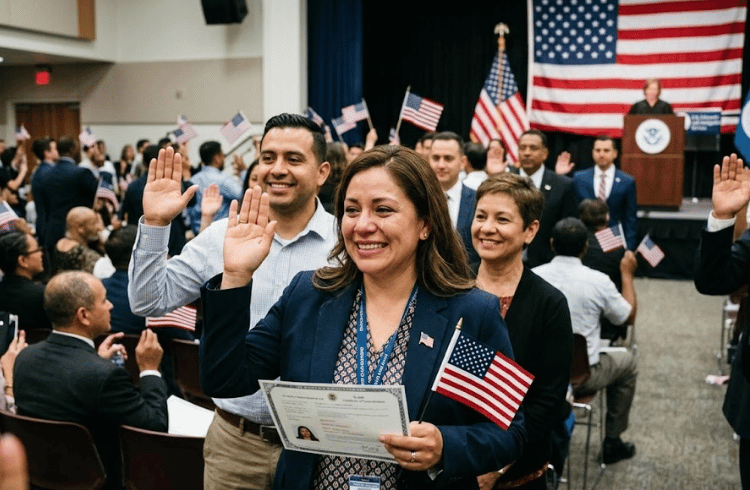
Your oath ceremony is the final step in the U.S. naturalization process. Passing your interview and receiving approval do not make you a citizen yet. You become a U.S. citizen after taking the Oath of Allegiance at the ceremony.
USCIS may schedule the ceremony on your interview day or send a later appointment notice. That notice is Form N-445, Notice of Naturalization Oath Ceremony. It gives your date, time, location, and instructions for attending.
Direct answer: A U.S. naturalization ceremony completes the citizenship process after USCIS approves your application. You check in, answer final eligibility questions, return your Green Card when required, take the Oath of Allegiance, and receive your Certificate of Naturalization. Review that certificate carefully before leaving.
Key Oath Ceremony Facts
| Topic | What to Know |
|---|---|
| Main notice | Form N-445 |
| Final citizenship step | Taking the Oath of Allegiance |
| Green Card | Usually returned during check-in |
| Citizenship begins | After taking the oath |
| Proof of citizenship | Certificate of Naturalization |
| Ceremony type | Administrative or judicial |
| If you cannot attend | Follow N-445 instructions and request rescheduling |
| Important next steps | Passport, Social Security record, voter registration |
USCIS conducts administrative ceremonies, while eligible courts conduct judicial ceremonies. Both can administer the required oath under applicable rules. Your appointment notice remains the best source for ceremony-specific instructions.
What to Bring to Your Oath Ceremony
Start with Form N-445 and complete the required questionnaire before you arrive. USCIS reviews your answers during check-in. Bring any additional documents specifically requested on your notice.
You will normally need your Permanent Resident Card, commonly called a Green Card. USCIS generally collects the card at check-in. Exceptions apply if the card was lost or never issued.
Bring relevant USCIS-issued travel documents when your instructions require them. A venue may also require identification for security screening. Court security rules can differ, so read every supplemental instruction you receive.
A useful preparation checklist includes:
- Form N-445, completed as instructed.
- Your Permanent Resident Card, unless an exception applies.
- USCIS-issued travel documents requested in your notice.
- Government photo identification if required by the venue.
- Any additional evidence USCIS specifically asks you to provide.
- Your appointment instructions and venue information.
- Extra travel time for parking, security, and check-in.
If your case involves an unusual immigration issue, professional guidance may be useful before ceremony day. MyURLPro also covers resources for people seeking immigration lawyers and legal assistance in Texas. That information can help readers understand when immigration counsel may be appropriate.
What Happens When You Arrive
The first formal step is usually check-in with USCIS. An officer reviews your N-445 responses and confirms you remain eligible. USCIS may ask about relevant events occurring since your naturalization interview.
These questions matter because circumstances can change after an interview. International travel, arrests, or other developments may require further review. Answer questions accurately and follow the officer’s instructions if additional information is requested.
Security and processing times vary by location. Federal courthouses may require screening before you enter the ceremony area. Your scheduled time should therefore control your arrival plans rather than a general online estimate.
Returning Your Green Card
USCIS generally collects your Permanent Resident Card before the naturalization process is completed. You will no longer rely on that card after becoming a citizen. Your Certificate of Naturalization becomes important evidence of your new citizenship status.
USCIS can waive the Green Card return requirement only in limited situations. One example involves applicants who previously documented that the card was lost. Follow your notice rather than assuming an exception applies to you.
Readers researching earlier immigration stages can also review MyURLPro’s overview of U.S. visas and immigration topics. Visa status and naturalized citizenship are different legal concepts. The ceremony described here concerns approved naturalization applicants.
Taking the Oath of Allegiance
Taking the Oath of Allegiance is the legal event that completes naturalization. USCIS states that an approved applicant is not yet a citizen before taking it. The oath is administered during an authorized naturalization ceremony.
The promises include supporting and defending the Constitution and showing allegiance to the United States. The oath also contains commitments concerning national service when required by law. USCIS materials explain those commitments as part of naturalization.
Certain applicants may qualify for an approved modification or waiver of portions of the oath. Eligibility may depend on qualifying religious beliefs, conscientious objections, or certain disabilities. USCIS applies specific legal requirements when considering these requests.
Receiving Your Certificate of Naturalization
After you take the oath, you receive a Certificate of Naturalization as proof of citizenship. USCIS advises new citizens to examine the certificate before leaving. Report any apparent error immediately while ceremony staff can address it.
Store this document securely because you may need it for future citizenship-related matters. Replacing a lost certificate generally requires filing Form N-565 with USCIS. Keeping a secure record of important document information can also help with future applications.
Your certificate can also serve as citizenship evidence when applying for your first U.S. passport. The State Department requires physical citizenship evidence for an in-person passport application. A Certificate of Naturalization is one accepted form.
What to Do After Becoming a U.S. Citizen
Several practical tasks become relevant once your naturalization is complete. You can apply for a U.S. passport using proof of citizenship. You may also need to update government records to reflect your new status.
USCIS advises new citizens about updating their Social Security records. Current USCIS information notes that system information can take time to reach SSA. Follow current SSA and USCIS instructions when updating your record.
MyURLPro has a separate overview of Social Security legal assistance and claims. That article focuses on benefit claims rather than citizenship-status updates. It can still provide background for readers dealing with separate Social Security issues.
You may also apply to register to vote after becoming eligible as a citizen. Registration rules and deadlines are administered under state and local requirements. Citizenship ceremonies may provide registration information or assistance.
What If You Cannot Attend Your Scheduled Ceremony?

Do not ignore your appointment if you cannot attend. USCIS instructs applicants to follow the N-445 process to request a new date. Explain why you cannot attend and follow USCIS instructions.
Repeatedly missing scheduled ceremonies can create serious problems for the naturalization application. USCIS states that failing to appear more than once may lead to denial. Request rescheduling properly instead of simply missing the appointment.
Keep copies of any rescheduling request and related correspondence. Confirm that USCIS has your current mailing address when required. Accurate contact information helps reduce the risk of missing an important notice.
Can Family Members Attend?
Guest rules depend on the ceremony location and available capacity. Some events allow family members, while smaller locations may impose limits. Courthouse ceremonies also follow local security and courtroom rules.
Check your appointment notice before making plans for guests. Do not assume rules from another applicant’s ceremony will apply to yours. Your venue’s instructions are the most reliable guide for attendance restrictions.
Photography and phone rules can also differ between facilities. Some courts restrict recording devices or photography inside courtrooms. Check the venue’s current rules before bringing equipment.
Frequently Asked Questions
How long does an oath ceremony take?
There is no single nationwide duration for every ceremony. Check-in, security, venue size, and the number of applicants affect the schedule. Some court guidance tells applicants to prepare to remain at the location for several hours.
Arrive according to the time shown on your notice. Allow additional time, as courthouse security or parking could cause delays. When possible, avoid making important appointments immediately afterward.
Am I a citizen after passing my naturalization interview?
No. Approval of your application or successful completion of the interview does not complete naturalization. You become a citizen after taking the Oath of Allegiance.
This distinction matters for documents and other citizenship-based actions. Continue following USCIS instructions until the ceremony is completed. Keep your current immigration documents available until USCIS collects them.
Can the ceremony happen on the same day as my interview?
Yes, some applicants may have a same-day naturalization ceremony. Availability depends on the office and circumstances. Other applicants receive Form N-445 for a later ceremony.
Do not expect a same-day event unless USCIS tells you one is available. Your interview result and appointment instructions will determine the next step. Keep checking official notices sent for your case.
What should I do if my naturalization certificate has an error?
Review the certificate before leaving the ceremony location. USCIS specifically advises new citizens to report errors before departure. Addressing an apparent problem immediately may prevent complications later.
Your certificate is important proof of U.S. citizenship. Check your name and other identifying information carefully. Follow USCIS instructions if you need a correction or replacement.
Prepare for Ceremony Day With Your Notice in Hand
A naturalization ceremony marks the legal completion of a long immigration process. Preparation is easier when you organize your documents and read every USCIS instruction beforehand. Your Form N-445 should guide your plans for the specific event.
Bring the requested documents and allow enough time for check-in and security. Carefully review your Certificate of Naturalization once you receive it. Then complete important post-naturalization tasks using current federal and state guidance.
For more plain-English legal information, explore the MyURLPro Law section. Use official USCIS instructions whenever they conflict with general online information. Individual immigration questions may also require advice from a qualified immigration attorney.
—–