

Mosquito bites can cause itching, skin irritation, and more serious health risks for dogs. Choosing mosquito repellent for dogs requires more care than reaching for your own bug spray. Human products may contain ingredients that should never be applied to pets.
In the United States, mosquito protection should work alongside year-round heartworm prevention. The American Heartworm Society has diagnosed heartworm disease in every U.S. state. Repellents can reduce bites, but they cannot replace preventive heartworm medication.
| Protection option | What it does | Main safety point |
| Dog-labeled topical products | May repel or kill mosquitoes, fleas, and ticks | Use only for the species, age, and weight listed |
| Dog-labeled repellent sprays | Offer temporary bite protection | Follow application and reapplication directions |
| Environmental control | Reduces mosquitoes around your home | Remove standing water and repair screens |
| Heartworm preventive | Helps prevent heartworm infection | Use year-round as your veterinarian recommends |
| Human insect repellent | Designed for people | Do not apply to dogs unless specifically labeled for them |
Direct answer: Use only repellents labeled for dogs. Avoid applying human DEET products or concentrated essential oils to your pet. Combine a dog-labeled product with mosquito control around your home. Keep year-round heartworm prevention in place because repellent alone cannot prevent heartworm disease.
Key Takeaways
- Check that the product label specifically names dogs and mosquitoes.
- Never apply a human DEET spray to your dog.
- Treat permethrin products carefully when cats share the household.
- Avoid homemade repellents made with concentrated essential oils.
- Reduce standing water and limit exposure during heavy mosquito activity.
- Keep heartworm prevention current year-round.
Why Mosquito Protection Matters for Dogs
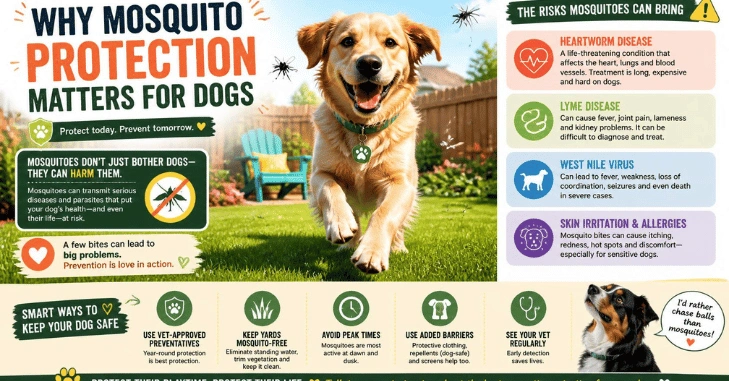
Mosquito repellent for dogs matters because mosquitoes can bite dogs even when their coats look thick enough to provide protection. Areas with thinner hair can remain exposed, including the belly, ears, groin, and inner legs. Bites may leave small red welts or cause scratching and irritation.
The larger concern is heartworm disease, which infected mosquitoes can transmit between susceptible animals. Dogs can develop serious damage involving their lungs, blood vessels, and heart. Prevention is much easier than treating an established heartworm infection.
U.S. dog owners should not assume cold winters eliminate this risk. Mosquito seasons vary, and local conditions can extend insect activity. The American Heartworm Society therefore recommends year-round preventive medication for dogs.
How to Choose Mosquito Repellent for Dogs Safely
Start with the product label rather than the marketing claims on the package. The label should specifically permit canine use and identify the pests it controls. Follow its age, weight, application, and reapplication restrictions carefully.
Some veterinary topical products combine ingredients that repel or kill mosquitoes with those that target fleas and ticks. Permethrin-containing formulations are one example, as long as they are specifically formulated and labeled for dogs. Formulation and dosage matter, so the active ingredient alone cannot determine a product’s safety.
Your veterinarian can also help when your dog has unusual medical needs. Puppies, seniors, pregnant dogs, or dogs taking medications may need additional consideration. Veterinary advice is especially useful when several parasite-control products would otherwise overlap.
For broader dog-care reading, MyURLPro’s Pets section covers other ownership and outdoor topics. New owners can also review these first-time dog ownership tips before building a preventive-care routine.
Do Not Put DEET Bug Spray on Your Dog
DEET works well as a human insect repellent, but that does not make it suitable for pets. The Merck Veterinary Manual advises against giving or applying DEET to dogs and cats. Reported problems include weakness, seizures, paralysis, and liver effects.
Human products also raise the risk of ingestion because dogs lick their coats and skin. Even spray transferred from your hands can create unnecessary exposure. Keep your dog from licking recently treated human skin until the product has dried as directed.
If DEET gets onto your dog, contact your veterinarian or an animal poison service promptly. Watch for drooling, vomiting, tremors, unusual agitation, weakness, or difficulty walking. Severe insecticide poisoning can also cause seizures or collapse.
Permethrin Can Protect Dogs but Requires Cat Precautions
Permethrin is a synthetic pyrethroid used in certain canine flea, tick, and mosquito products. Properly formulated dog products can provide mosquito protection when used exactly as labeled. Some topical combinations can repel mosquitoes for several weeks.
The major household warning involves cats, which are far more sensitive to many permethrin formulations. EPA guidance on pet spot-on products warns that close contact with treated dogs can sometimes endanger cats. A cat may also become exposed by grooming a recently treated dog.
Ask your veterinarian before selecting a permethrin product in a mixed dog-and-cat household. Follow separation and drying instructions printed on the package. Never put a dog-only permethrin treatment directly onto a cat.
Are Natural and Essential-Oil Repellents Safer?
A “natural” label does not automatically make a product suitable for canine skin. Concentrated essential oils can enter through skin, lungs, or the digestive tract. Dogs can develop vomiting, weakness, neurologic signs, or other problems after harmful exposure.
This does not mean every commercial product containing plant-derived ingredients has the same risk. Concentration, formulation, application method, and the dog’s health all affect safety. A properly formulated canine product differs greatly from applying concentrated oil from a household bottle.
Avoid homemade mixtures that require applying concentrated citronella, tea tree, peppermint, or similar oils directly onto your pet. Veterinary toxicology guidance specifically advises against applying concentrated essential oils to animals. If you prefer a plant-based formula, ask your veterinarian about a commercial product.
Reduce Mosquitoes Around Your Home
Repellent works better when fewer mosquitoes reach your dog. Female mosquitoes commonly breed in small collections of standing water around homes. Buckets, plant saucers, toys, gutters, and outdoor containers can all become breeding sites.
Check your property each week and empty unnecessary standing water. Clean outdoor water containers and keep screens in good condition. These measures protect both pets and people from mosquito exposure.
Think about irrigation habits as well, especially when water pools around the yard. MyURLPro’s guide to above-ground sprinkler systems explains timers and water-control options. Preventing persistent puddles can support a broader mosquito-control plan.
Many mosquito species become especially noticeable around dawn or dusk, although activity varies by species. Changing walk times can reduce exposure when local mosquito activity is high. Screened indoor areas also provide useful protection.
Repellent Does Not Replace Heartworm Prevention
A repellent targets mosquitoes before or during contact with your dog. Heartworm medication addresses a different risk. Using one does not make the other unnecessary.
The American Heartworm Society recommends year-round heartworm prevention and practical mosquito-control measures. Its guidance states that repellents should be an additional defense where transmission risk warrants them. Repellent should never become the sole heartworm strategy.
Your veterinarian can recommend an appropriate preventive based on your dog’s age and health. Testing schedules also matter, particularly when prevention has been missed or recently started. Maintaining a consistent schedule reduces avoidable gaps in protection.
Outdoor trips can also change your dog’s mosquito exposure. Before camping, hiking, or taking a pet-friendly vacation, review your parasite plan with your veterinarian. MyURLPro’s guide to travel destinations with dogs offers related planning ideas for canine trips.
What to Do After a Mosquito Bite
Most uncomplicated mosquito bites need little treatment and improve on their own. Try to prevent persistent licking or scratching that damages the skin. Contact your veterinarian if swelling, discharge, severe itching, or skin injury develops.
Facial swelling, severe vomiting, weakness, breathing problems, or collapse require urgent veterinary attention. These signs can indicate a serious allergic reaction or another medical emergency. Do not wait for symptoms to resolve on their own.
A mosquito bite does not mean your dog immediately has heartworm disease. Heartworm infection develops over time, and you can’t judge it from a fresh bite. Staying current with prevention and veterinary testing provides much stronger protection.
Build a Safer Mosquito Plan for Your Dog
Start by checking your dog’s current heartworm and parasite-prevention plan with your veterinarian. Then choose only canine-labeled repellents that fit your household and local mosquito risk. This approach protects against bites without creating avoidable chemical exposure.
Reduce standing water, adjust outdoor routines, and keep product labels available for reference. Cat owners should take extra care before using dog products containing permethrin. These simple checks add layers of protection instead of relying on a single product.
For more pet ownership ideas, visit MyURLPro’s dog activity guide. Outdoor fun remains easier when parasite prevention and mosquito precautions are already part of your routine.
Frequently Asked Questions
Can I use human mosquito repellent for dogs?
Don’t use a human product just because it’s safe on your skin. DEET should not be applied to dogs because veterinary sources report serious toxic effects. Choose a product specifically labeled for canine use instead.
What ingredient keeps mosquitoes away from dogs?
No single ingredient suits every dog or household. Certain dog-labeled products containing permethrin or related veterinary insecticides can repel mosquitoes. The exact formulation and label matter more than the ingredient name.
Is citronella safe for dogs?
Safety depends heavily on concentration, formulation, and use. Veterinary toxicology guidance says not to apply concentrated essential oils directly to pets. Use a properly formulated canine product rather than homemade concentrated citronella preparations.
Does heartworm medicine repel mosquitoes?
Do not treat standard heartworm prevention as a mosquito repellent. Its purpose is to prevent heartworm infection after exposure to infected mosquitoes. Some separate combination parasite products also provide mosquito control, so check each label carefully.
Do dogs need mosquito protection throughout the United States?
Mosquito exposure and seasonal intensity vary widely across the country. Heartworm disease has still been diagnosed throughout all 50 states. The American Heartworm Society recommends year-round heartworm prevention rather than relying on a predicted mosquito season.